See the paintings in the online shop
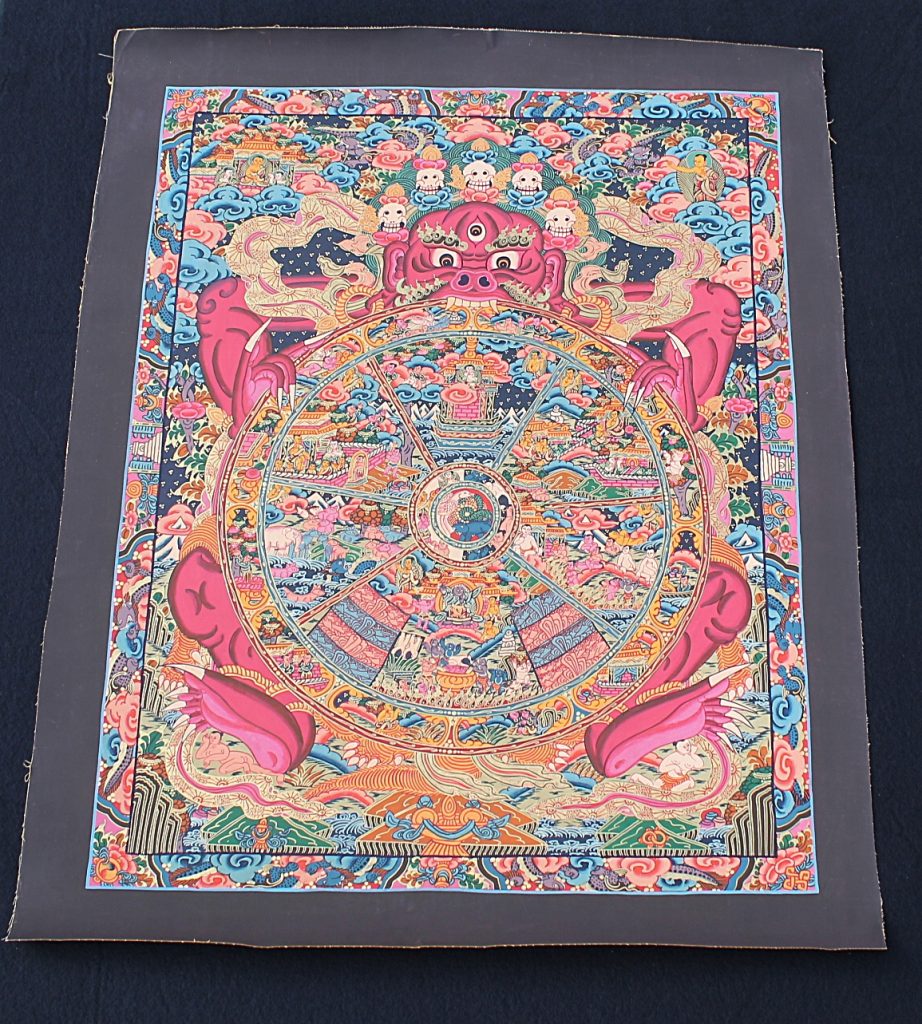
The Wheel of Life is a detailed depiction of the fundamental Tibetan belief of transmigratory existence. It explains the theory of rebirth in the clearest way:
How a person is reborn in the universe depends on the person’s desires, actions, and the amount of merit and demerits (karma). How well he has done in his previous life. The suffering of rebirth affects the entire living universe.
Explore a whole new world
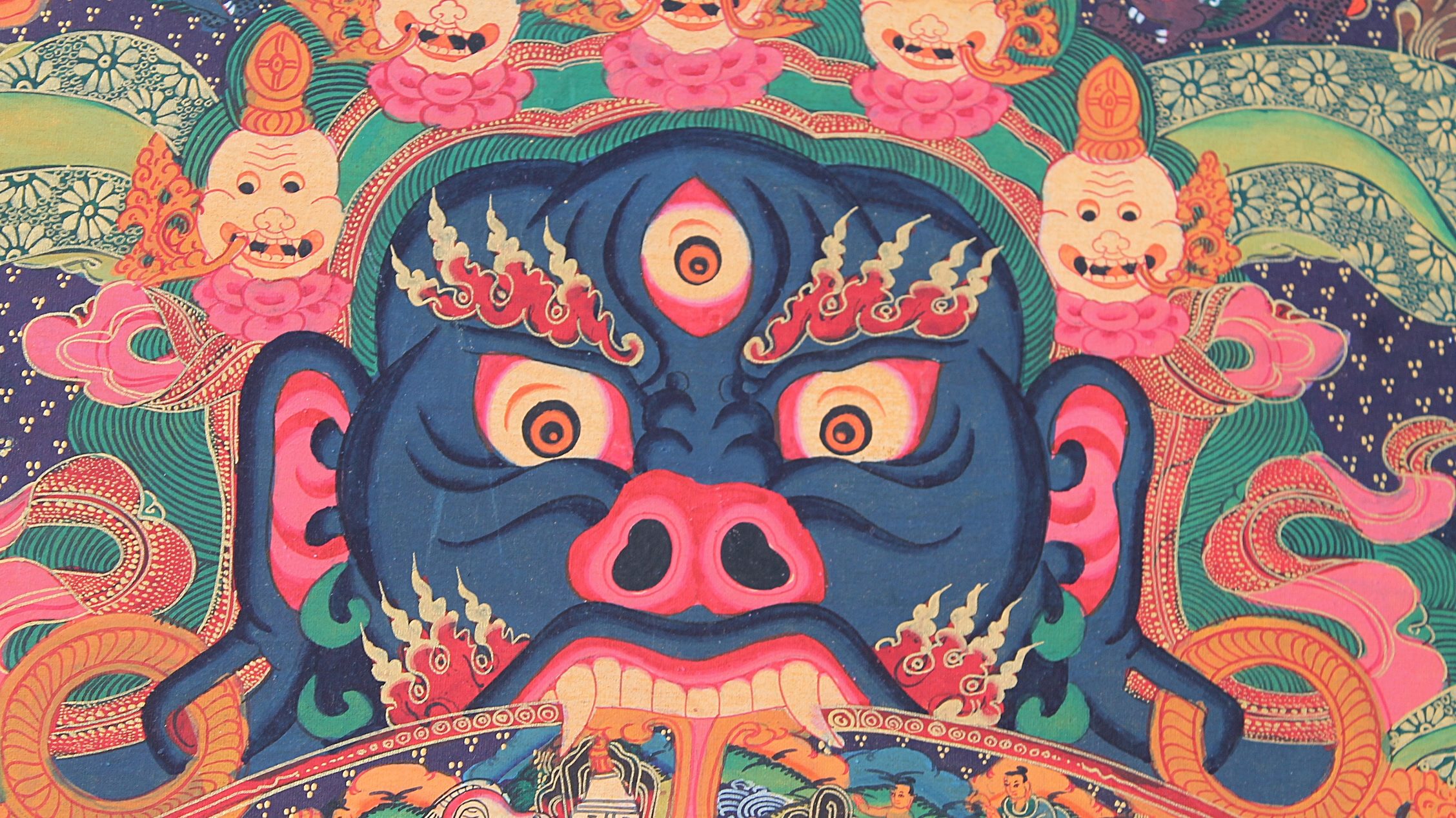
The wheel is held in the embrace of Yama or Shenje. He is the ruler of the dead, who shows that all living beings eventually meet death. Outside the wheel is the figure of Lord Buddha, who is hindered by moral and mental obstacles that can prevent all living beings from achieving enlightenment. His presence outside the wheel symbolizes the exit from the cycle of life.
The Wheel of Life is a symbolic representation of samsara, designed by the Buddha himself to help ordinary people understand Buddhist philosophy and teachings.
Samsara is divided into six different parts. These are the followings:
God Realms
Demigod Realms
Human Life
Animal Life
Hungry Spirit
Hell Life
Moving towards the center, we see a half-light, half-dark circle. This represents the law of karma or action.
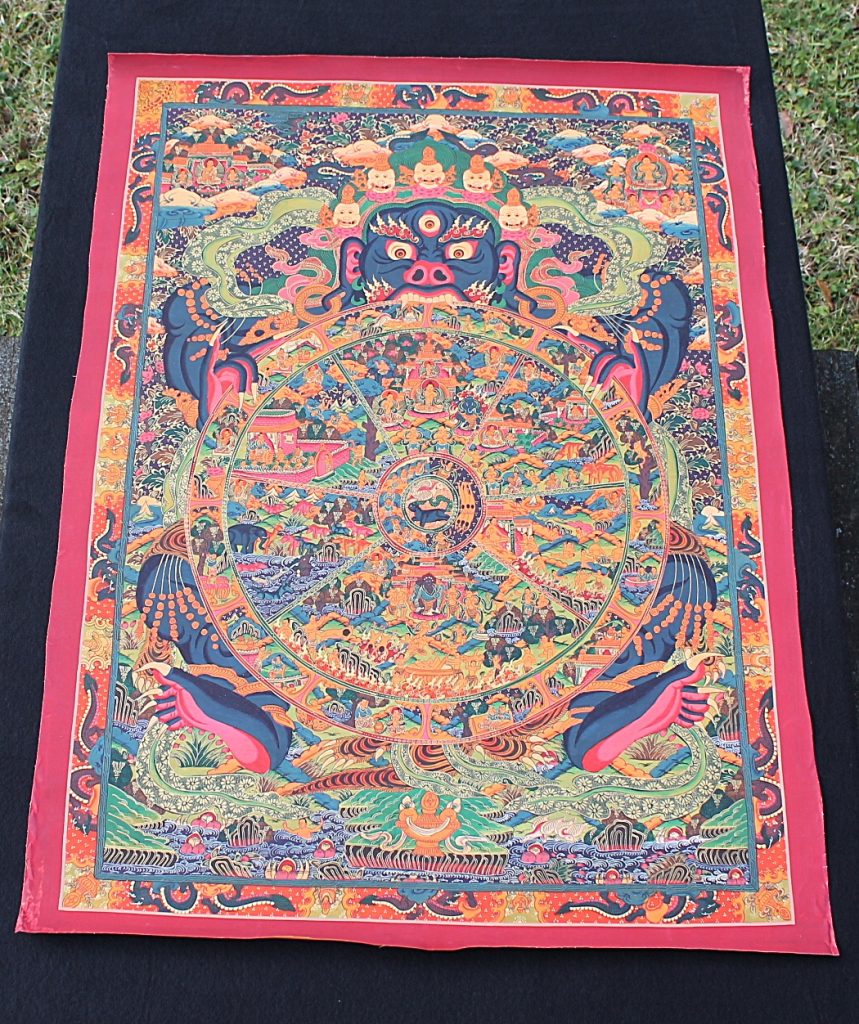
The Wheel of Life is made up of the following elements:
1. The pig, snake, and peacock in the center of the wheel represent the three poisons of ignorance, anger, and desire.
2. The second half of the circle, light or dark, represents karma or action.
3. The third layer represents the six realms of samsara.
4. The fourth layer represents the twelve links or origins of human life, or the twelve stages, the different activities.
5. The wild figure (Yama or Shenje) holding the wheel represents impermanence.
6. The moon above the wheel represents liberation from samsara, i.e. cyclic existence.
7. The Buddha pointing to the moon or the white circle indicates the possibility of liberation from samsara.
In the center of the wheel, three different animals are depicted, representing three negative emotions:
The pig represents ignorance
The snake represents anger
The peacock represents greedy desire
These emotions are the main causes of suffering.